Growing up in Cape Town, places like Bo-Kaap Cape Town were never really “destinations”… they were just part of the city. You drive past, you admire the colours, maybe snap a quick photo if you’re feeling touristy, and then you carry on with your day.
Fast forward to now, life in Pretoria, and suddenly every trip back home feels like a mini holiday. So I’ve made it a little tradition, every time I visit Cape Town, I pick one thing to do properly. Not the rushed “we’ve seen it before” version, but the slow, curious, let’s-actually-experience-it version.
This time, it was Bo-Kaap Cape Town.
On a crisp winter’s day (the kind where the sun is shining but you’re still slightly confused about your outfit choices), I spent the morning wandering through the colourful streets of Bo-Kaap Cape Town with my mom, my brother, and my son. And let me tell you, exploring a place like this hits very differently when your child is finally old enough to ask questions that you can’t just answer with “because I said so.”
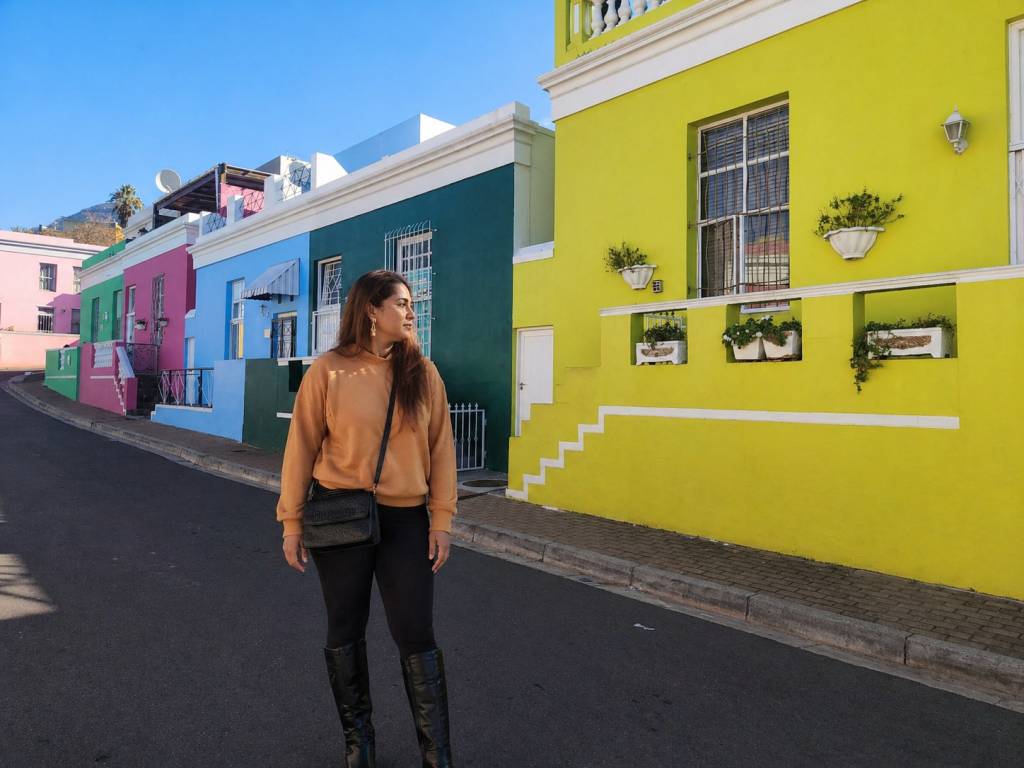
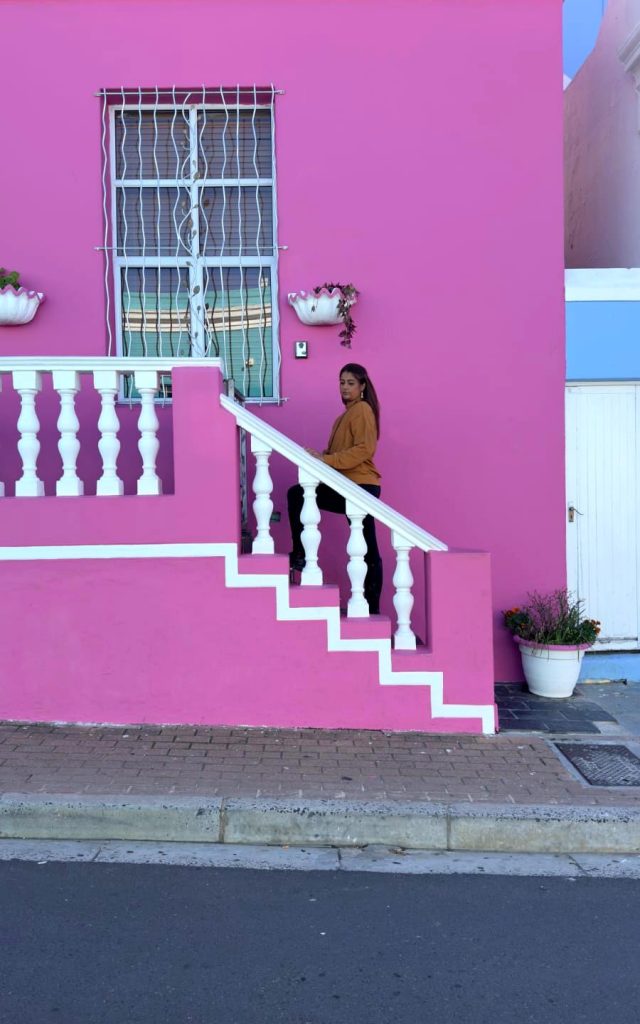
Walking past the iconic Bo-Kaap colourful houses, each one brighter than the next, it felt like stepping into a painting… but one with layers. Because yes, it’s beautiful. Yes, it’s Instagrammable. But there’s also history here, culture, and stories that go far beyond the colours on the walls.
And somewhere between the little staircases, the quiet corners, and the “wait, let me take one more picture” moments, this wasn’t just a stroll through a pretty neighbourhood… it was one of those simple, slow days that reminds you why Cape Town will always feel like home.
A Little History Behind the Colours
At first glance, Bo-Kaap Cape Town feels like a colour explosion in the best possible way. Bright pinks, bold greens, soft blues, sunshine yellows… it’s the kind of place that makes your camera work overtime.
But for me, it’s a little more personal than that.
Because while a lot of people talk about the colours like they’re just a trend or a backdrop… I remember them being part of something much deeper.
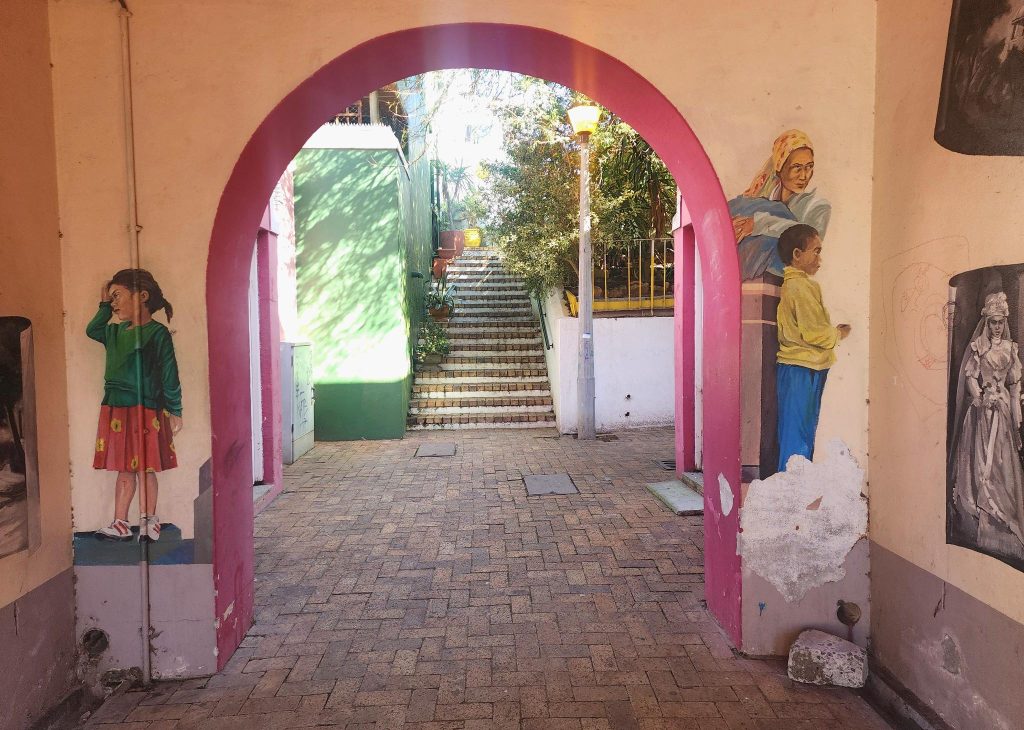
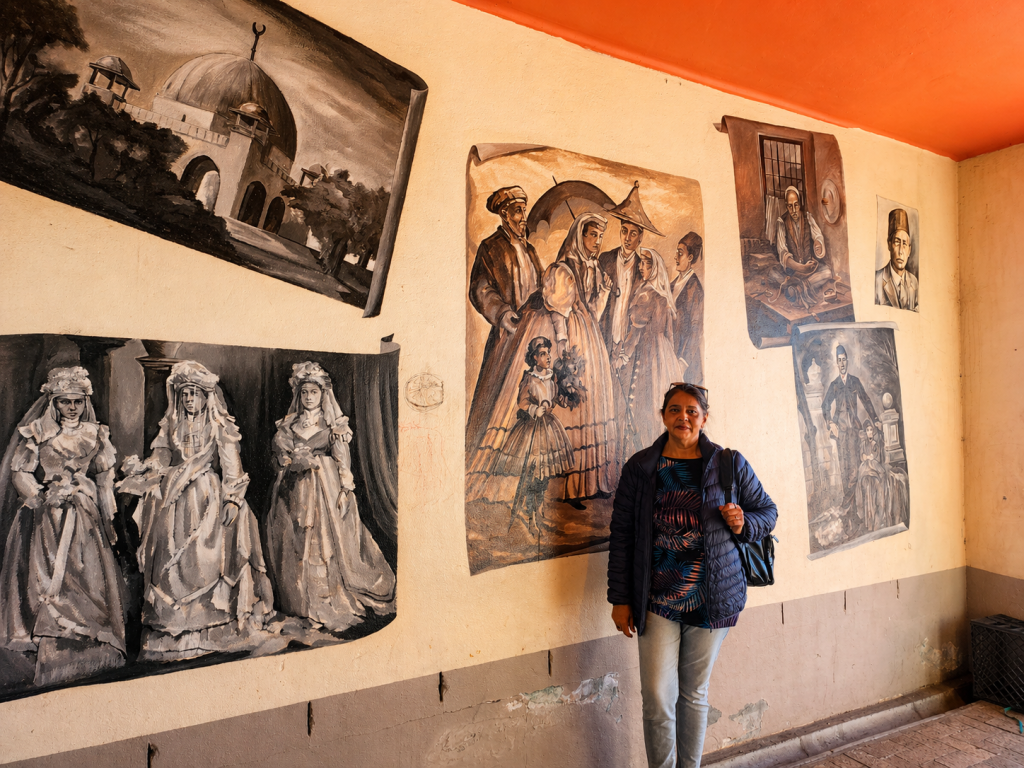
I was in my early twenties when international artists Nasser Palangi and his wife Farideh Zariv came to Cape Town and began working on a mural in Wale Street, a piece created to capture the essence of Bo-Kaap’s heritage and dedicated to the youth of the city. Local artists joined in… and one of them was my mom.
So while most people visit Bo-Kaap Cape Town for a few hours, I experienced it very differently.
I was there almost every day while she painted.
Spending time in the area, meeting people, making friends, and just soaking in the energy of the community, it wasn’t just about watching art come to life, it was about being part of something. The kind of moments you don’t realise are special at the time, but later on, they stay with you.
And that’s why walking through the Bo-Kaap colourful houses now feels different.
Because yes, it’s beautiful. Yes, it’s one of the most photographed places in Cape Town. But it’s also layered with history, creativity, and a strong sense of identity that you can still feel when you walk those streets.
Going back now, years later, with my own child, seeing him take it all in, ask questions, notice the colours, the details… it felt like everything had come full circle in the most unexpected way.
And suddenly, it wasn’t just a visit to Bo-Kaap Cape Town.
It was a return.
The Story Behind Bo-Kaap (It’s More Than Just Pretty Walls)
So once you’ve taken your hundred photos (no judgement, I was right there with you), it’s worth pausing for a second and asking… what’s the story behind all of this?
Because Bo-Kaap Cape Town isn’t just one of the most photographed neighbourhoods in the city, it’s one of the most historically rich too.
Dating back to the 1760s, this area was originally known as the Malay Quarter, home to many enslaved people brought to the Cape from places like Indonesia, Malaysia, and other parts of Africa. Over time, these communities built lives here, creating what we now know as the Cape Malay culture, deeply rooted in tradition, food, family, and faith.
And if you listen closely (or just follow your nose), you’ll notice it’s still very much alive today.
From the call to prayer echoing through the neighbourhood to the scent of spices drifting out of kitchens, Bo-Kaap Cape Town isn’t frozen in time, it’s lived in, loved, and continuously evolving.
And then there’s the colours.
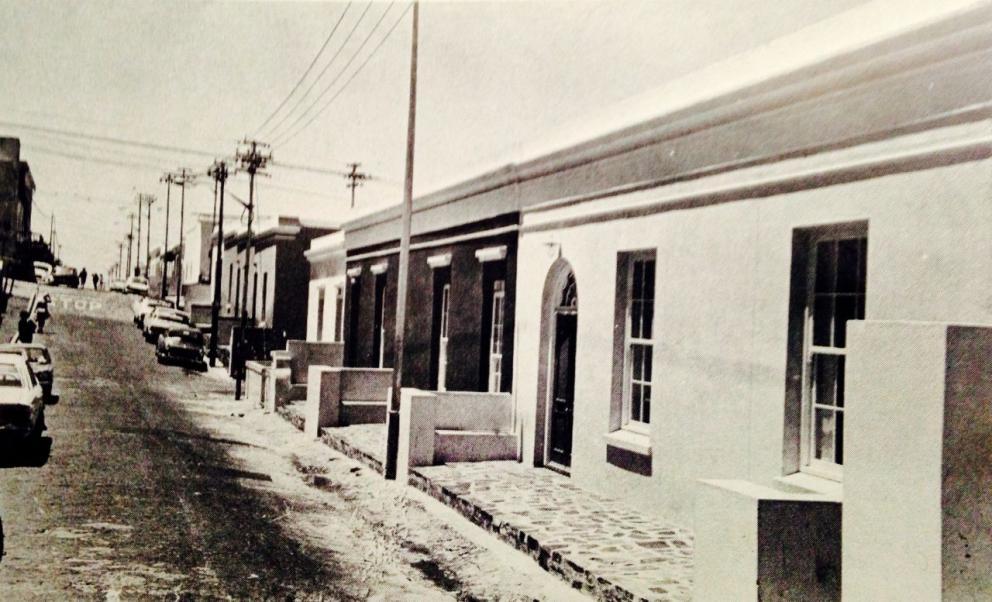
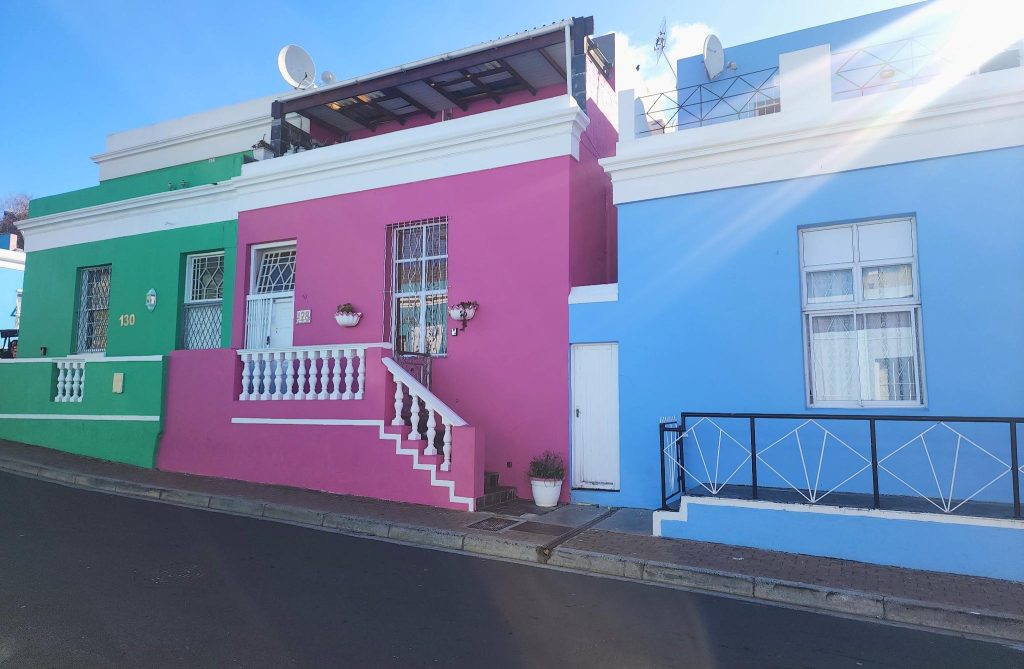
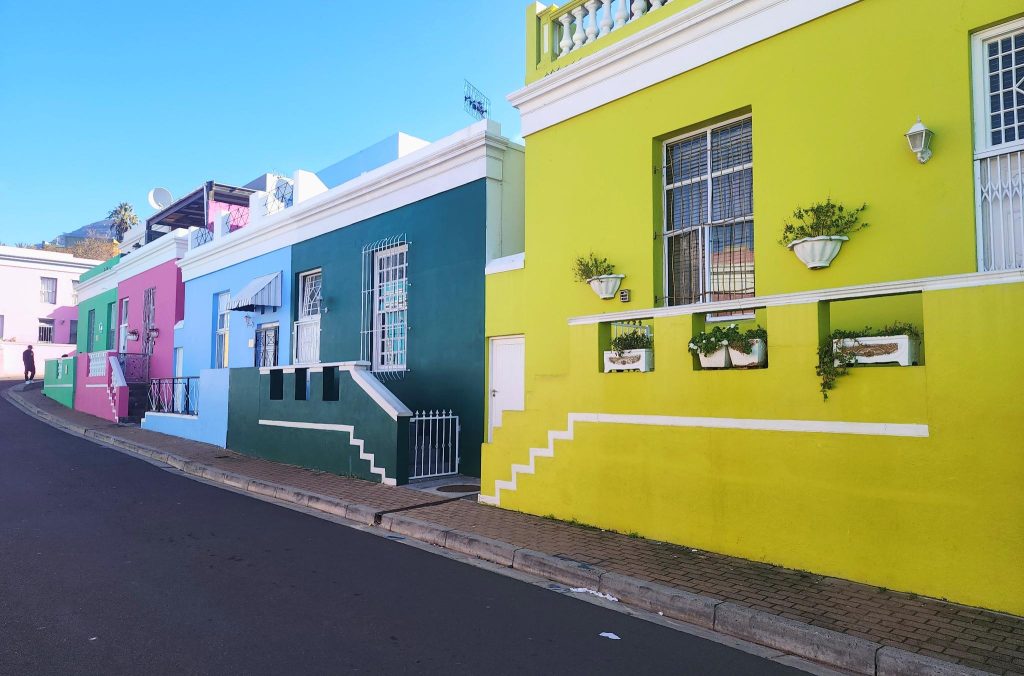
While I remember the area already being vibrant growing up, the colourful homes also carry meaning. As residents gained ownership of their houses after years of restriction, many chose to paint them in bright, bold shades as a form of expression, identity, and celebration.
So those iconic Bo-Kaap colourful houses?
They’re not just aesthetic.
They’re a statement.
Walking Through Bo-Kaap: A Slow, Colourful Kind of Day
After all the history, the stories, and my own little full-circle moment… we did what you’re actually supposed to do in Bo-Kaap Cape Town.
We walked.
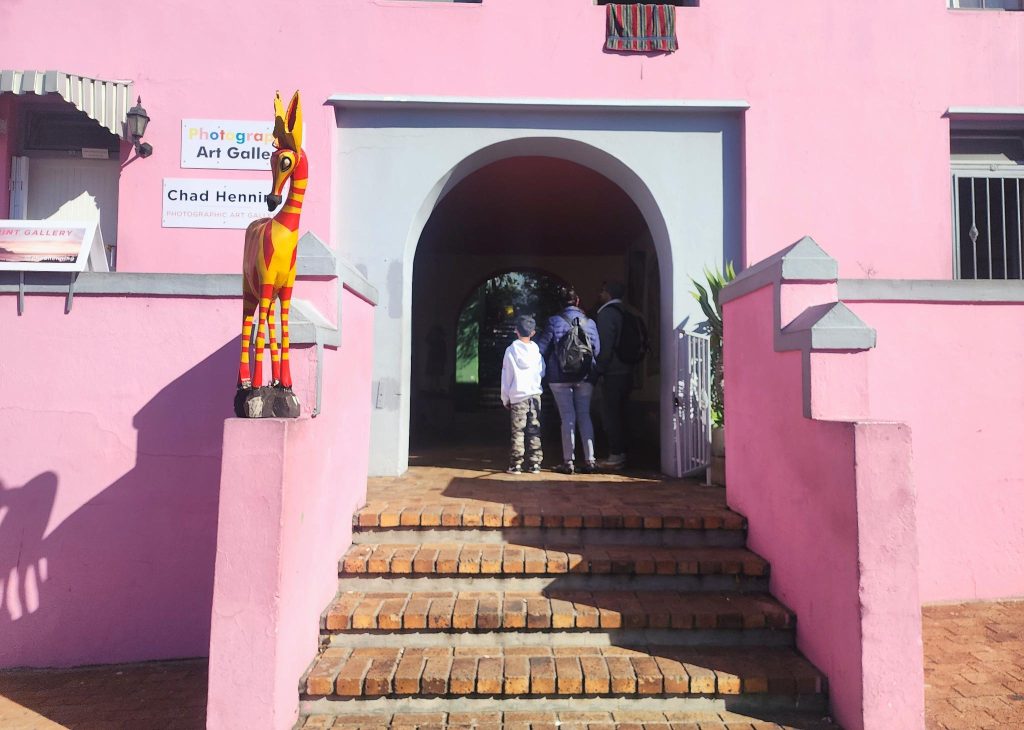
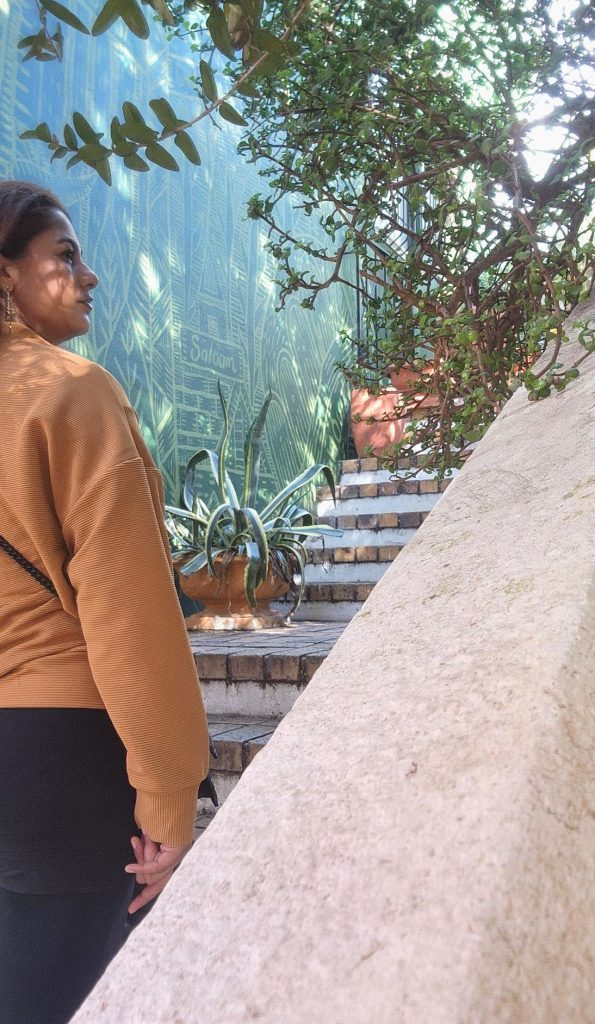
No strict plan, no rushing, no “okay next stop” energy. Just slow steps, stopping every few minutes because something caught our eye, a colour, a doorway, a staircase, or me saying, “wait, this is cute, stand there quickly.”
And that’s really the best way to experience Bo-Kaap Cape Town.
Because it’s not just about seeing the Bo-Kaap colourful houses, it’s about noticing the details. The little balconies, the plants hanging out of windows, the way every street feels slightly different from the last.
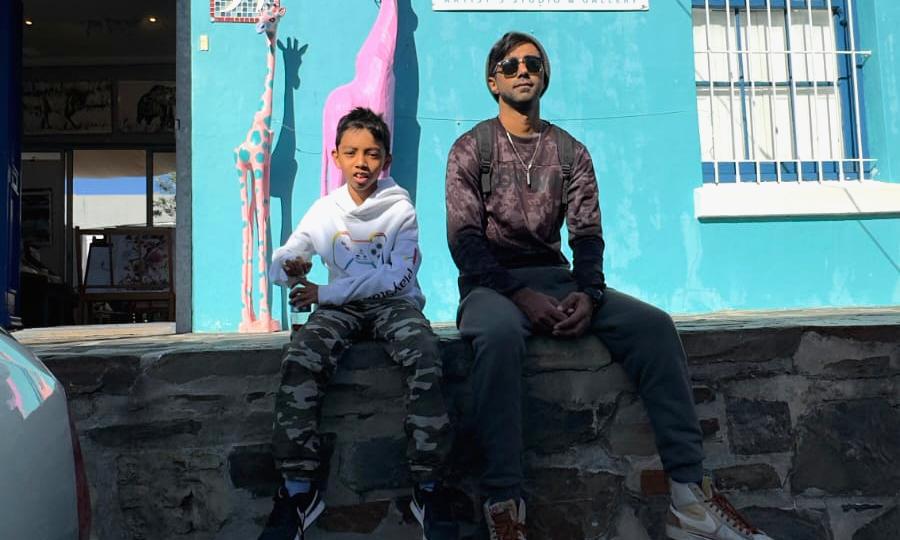
My son was taking it all in, asking questions, pointing things out I probably would’ve walked straight past. And there’s something about exploring a place through your child’s eyes that slows you down in the best way. Because sometimes, the more time you give a place… the more it gives back.
A Living Expression: Art, Solidarity & Why It Matters
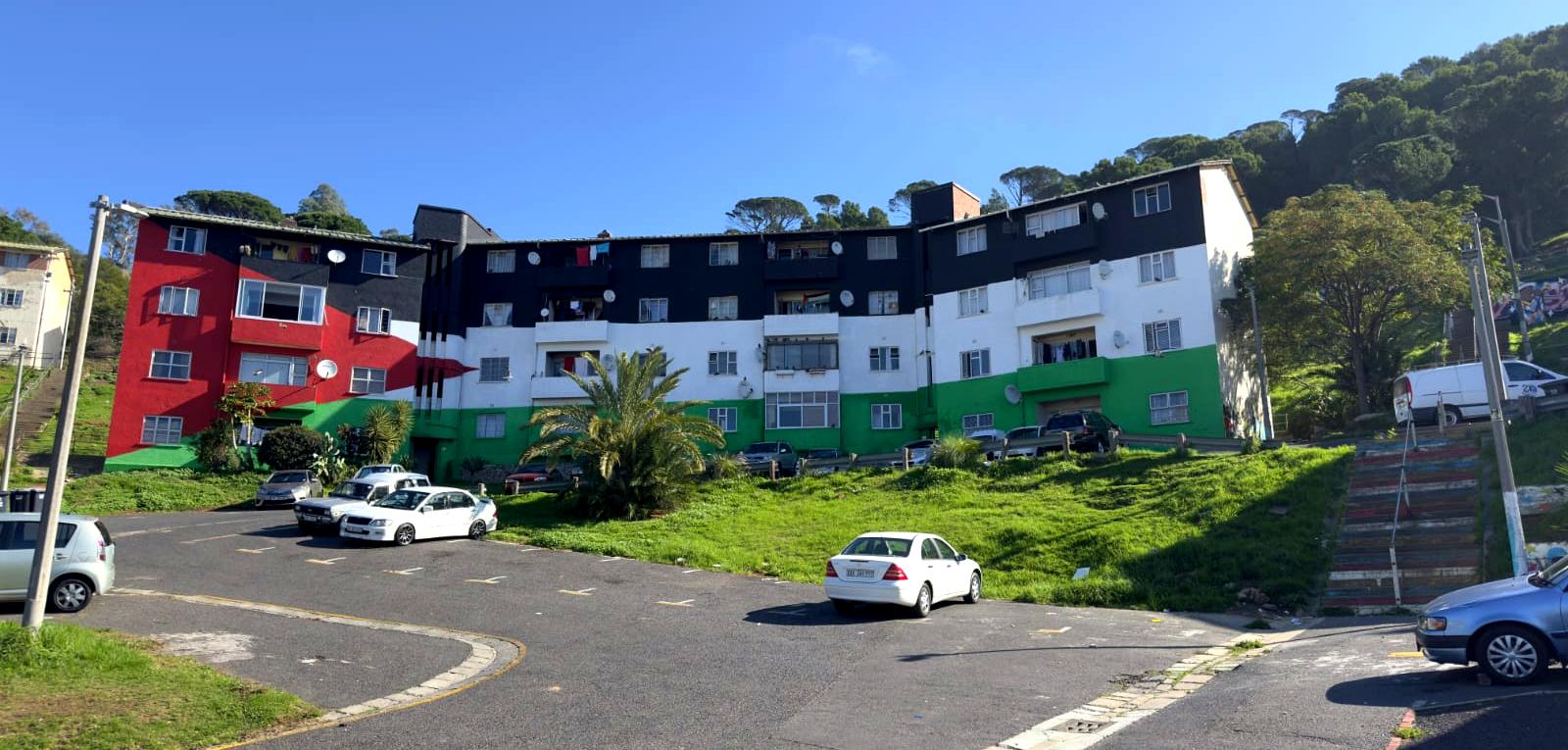
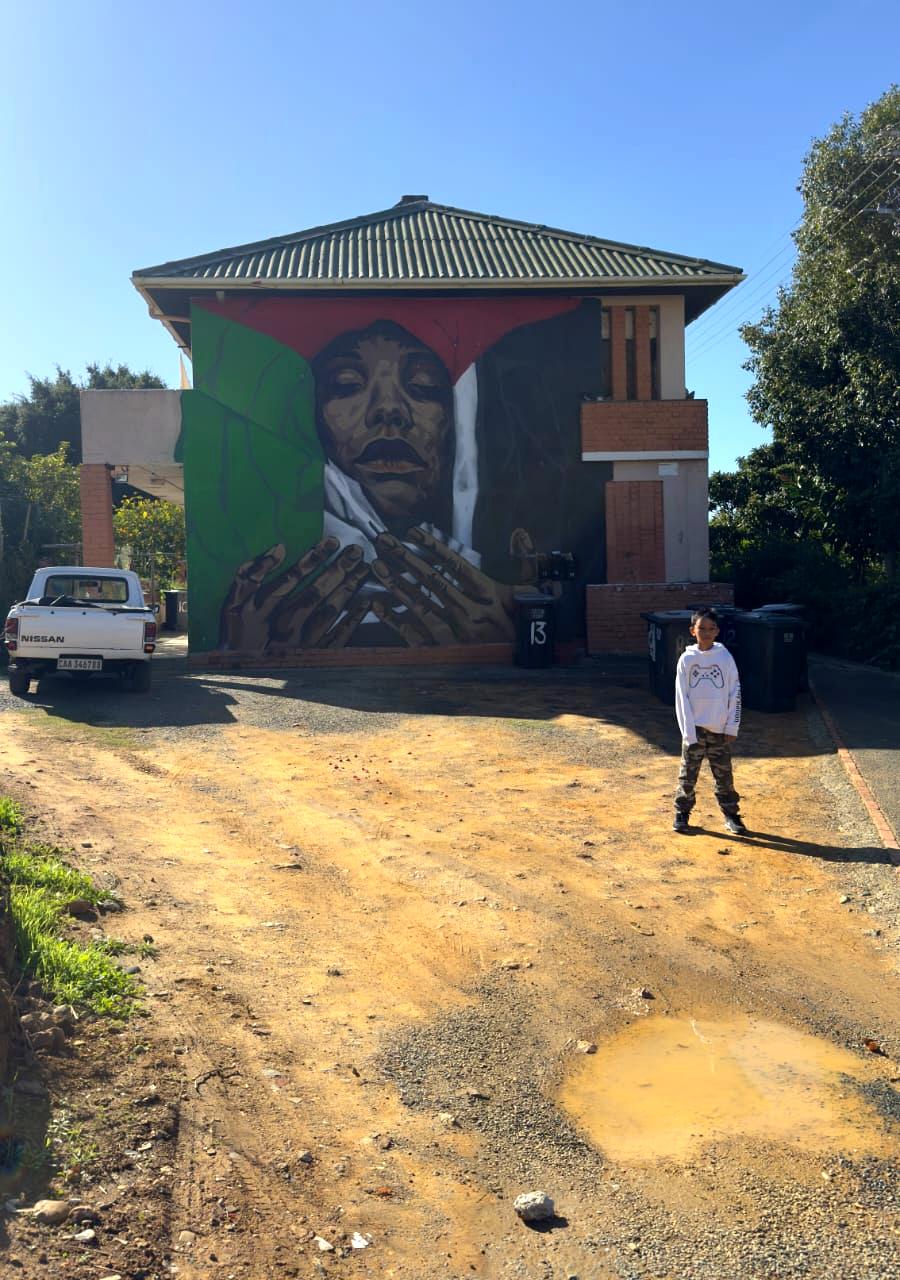
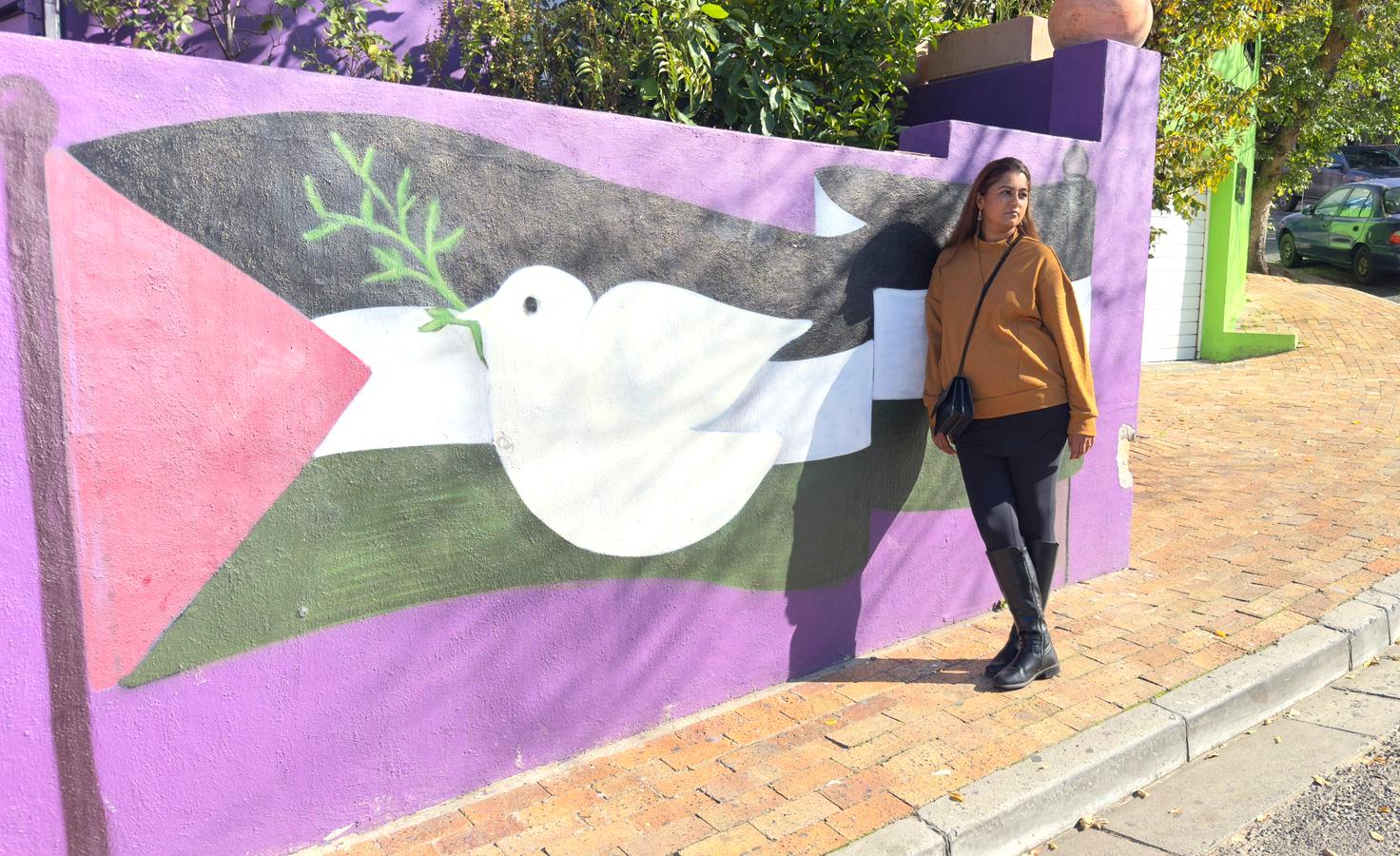
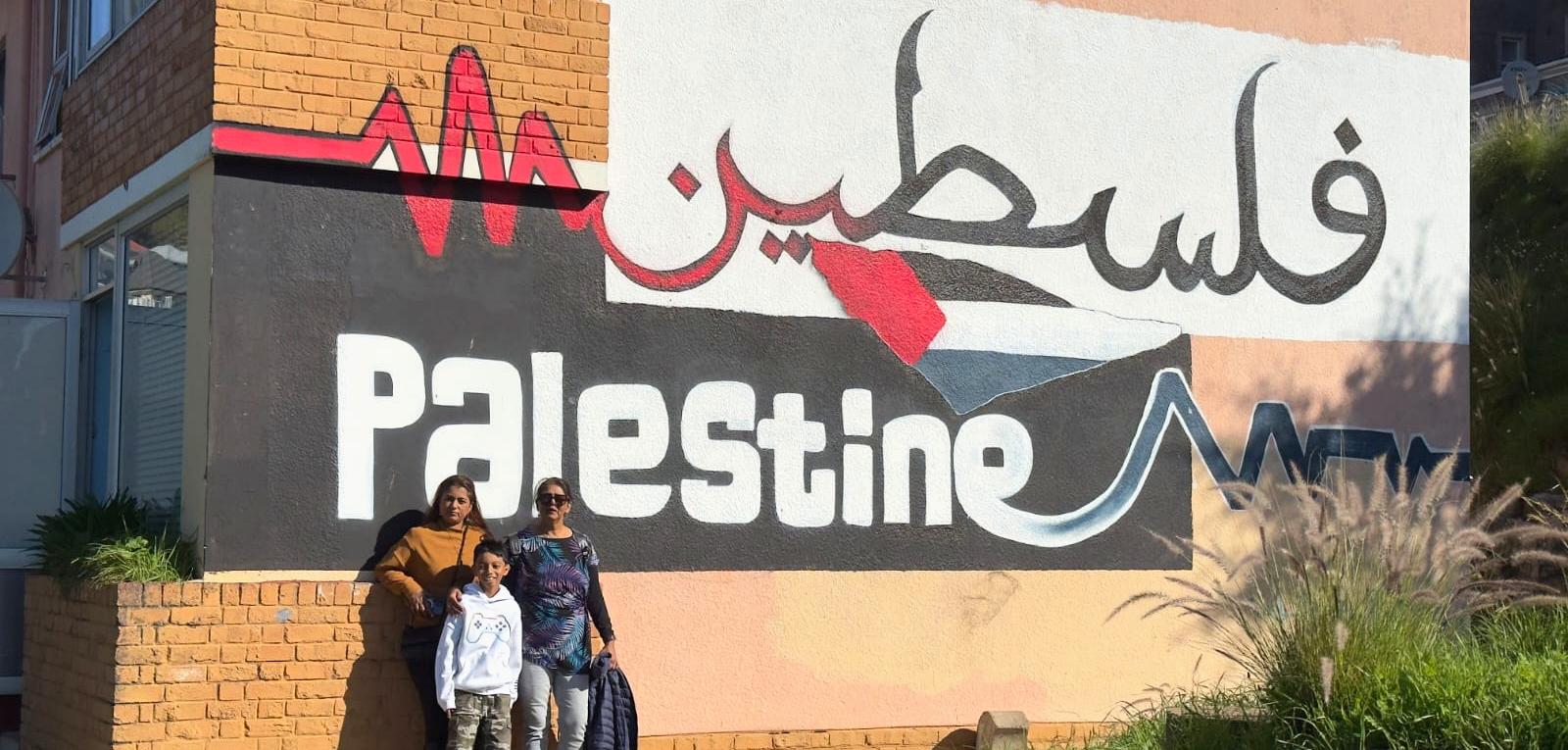
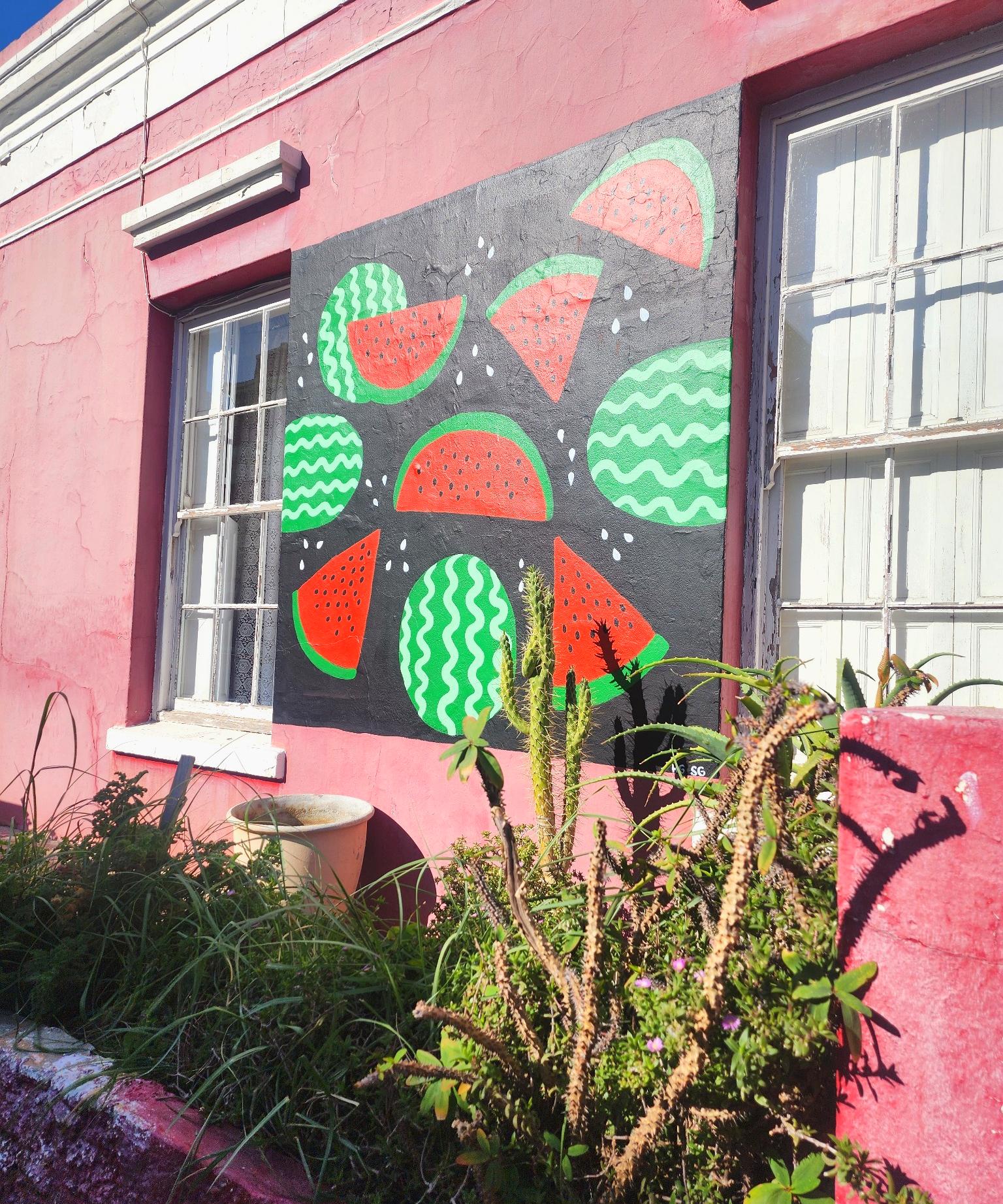
As we walked through Bo-Kaap Cape Town, it became clear that this wasn’t just about colour. Across walls and buildings, the colours and symbols of Palestine are everywhere, not subtle or accidental, but intentional. Almost every street carries some form of it, and it makes you stop and look a little closer.
This isn’t decoration. It’s a response.
In a country shaped by apartheid, where the fight for freedom and dignity is still deeply remembered, this kind of expression feels familiar. It reflects a shared understanding of injustice and what it means to stand against it. Bo-Kaap has always been a place of identity and voice, so seeing that expressed through art today feels aligned with its history.
For me, this hit personally. As a person of colour, raised on stories of my parents’ lived experiences under apartheid, stories of limited freedom and denied dignity, this is not something distant. It’s something I feel deeply. Seeing people still facing that loss of basic human rights in today’s world is something I cannot ignore, and it’s something I will always stand up for.
And in Bo-Kaap Cape Town, that stance is visible. Through art, through colour, and through a community that continues to speak.
Things to Do in Bo-Kaap
Bo-Kaap isn’t just about walking past pretty houses and calling it a day. There’s so much more to see, do, and experience if you take your time.
Here are a few things you don’t want to miss:
1. Wander the Colourful Streets
This one is obvious, but still worth it. Walk slowly, take your time, and explore beyond the “main” photo spots. Some of the best moments are in the quieter corners.
2. Visit the Bo-Kaap Museum
If you want to really understand the history of Bo-Kaap, this is a must. It gives context to the area, the people, and the culture that shaped it.
3. Spot the Murals
Look out for the artwork scattered across the area. From cultural storytelling to powerful global messages, the murals add another layer to Bo-Kaap’s identity today.
4. Try Traditional Cape Malay Food
Bo-Kaap is known for its rich Cape Malay flavours. Think spicy curries, samosas, and home-style cooking that feels like comfort in every bite.
5. Take It All In (Not Just Photos)
Yes, take the photos. But also pause. Look around. Listen and mingle with the locals. There’s something special about just being present here, you will be surprised at the stories you can hear.
Conclusion: A Colourful Kind of Home
Bo-Kaap will always be known for its colours. The pinks, the blues, the greens, the kind of streets that make you stop, smile, and take just one more photo. And honestly, it’s easy to see why. But for me, it’s more than just what you see.
It’s the memories layered between those colours, the stories, the history, the people. It’s growing up knowing this place, and then coming back to it with new eyes every time.
This visit felt a little different. Walking through the streets with my mom and my son, three generations in one place, it felt like everything connected, the past, the present, the stories we carry, and the ones we’re still learning.
And maybe that’s the magic of Bo-Kaap. It’s bright, bold, and beautiful, but it’s also deep, meaningful, and always evolving. A place that holds onto its roots while still finding new ways to speak.
Somehow, no matter how many times I come back, it always feels like home. Because in Bo-Kaap, the colour isn’t just on the walls, it lives in the story.